 Max's Blog
Listening Log #1
Week of January 27-February 3, 2026
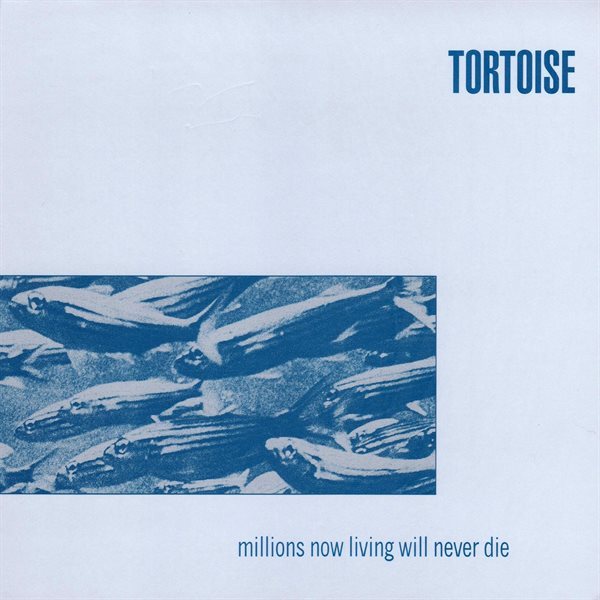
Tortoise – Millions Now Living Will Never Die (1996)
Avant-garde easy listening muzak. Djed starts off all laid-back, settling in with a krautrocky beat reminiscent of Neu! or Stereolab. The jazzy keys fit in, painting some comfortably vague impression of an office lounge. But seven minutes in, the setting gradually drops out, and at nine and a half minutes Tortoise bridge us to the next section with a stream of metallic blips, an irregular timbre barely recognizable as coming from David Pajo’s guitar. Pajo, a new addition to the group, carries over his masterful technique from Slint, with his tremolo picked chime-like harmonics gluing the two halves of Djed together, echoing his technique on Slint’s Good Morning, Captain (at 4:15).
The track is built on timbral juxtaposition. Once the organ comes in, it’s clear that whatever lounge setting we were in was post-apocalyptic, with marimbas and vibraphones stringing you along, never quite resolving before that “what the fuck” moment of 13:52 where the song starts skipping over itself like a scratched CD. And then a drone howls in through the barren landscape and we get those lovely sounds of broken transmissions at 15:28. The mood is something like nuclear fallout, and nothing resolves, as if the song has something it doesn’t want to tell you. The marimbas and vibes reenter, playing one last enigmatic melody, and in the last two minutes we suddenly return to a beat from simpler times, lounge music at the end of history.
The rest of the album is pretty good too. The majestic waltz of Glass Museum features one of Pajo’s best, most hypnotic riffs. Like his riff on Slint’s Washer, it unfolds with a grace and elegance that sets it apart from the rest of the record. The suspenseful midsection of the track is another highlight, tearing itself apart with its rhythmic propulsions and tense interplay between guitar and vibraphone before relaxing back into the main riff. The rest of the album is spottier, the tunes turning more cryptic, more like fragments than songs. What can we make of the brooding minimalism of A Survey, or the hauntological Dear Grandma and Grandpa? At least they stick the landing with the film noir panorama of Along the Banks of Rivers, something like the hushed theme of a private directive.
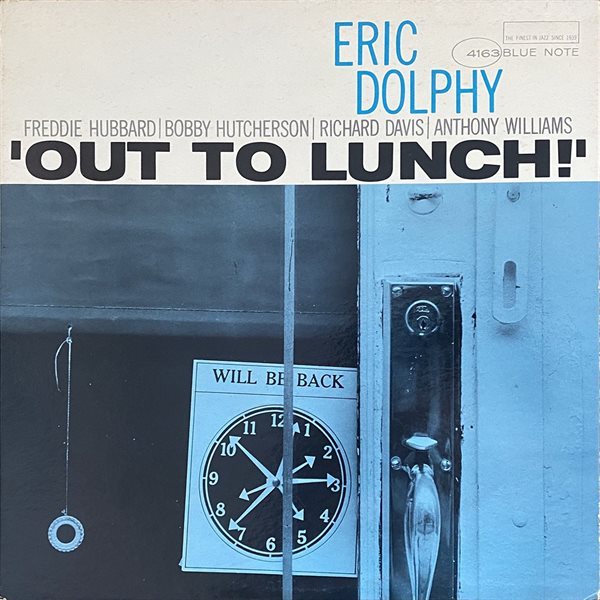
Eric Dolphy – Out to Lunch (1964)
And if we’re talking about vibraphone, let’s talk about Bobby Hutcherson. His vibes on this record drag you into the bizarro sound world immediately. As Eric Dolphy said, “Bobby’s vibes have a freer, more open sound than a piano. Pianos seem to control you, Bobby’s vibes seem to open you up.” Free from the handcuffs of chordal harmony, the players don’t impose on each other but rather converse freely through rigorous imagination, freewheeling flights of fancy that link up just barely often enough for everything to hang together, resulting in a feeling of in-the-pocket rightness even if you lose track of everything sixteen bars in. And the title track here is supposedly in 5/4, but the players don’t seem worried about that. As Dolphy says, “The bass follows no bar line at all. Notice Tony. He doesn’t play time, he plays.”
Mingus said of Dolphy that “he had mastered all the instruments he played. In fact, he knew more than was supposed to be possible to do on them,” and Dolphy’s mastery of his three signature instruments is clear on this record—bass clarinet on the first two tracks, alto saxophone on the last two, and flute on Gazzelloni. And Tony Williams’ drums perfectly complement the “intervallic” solos of Hubbard and Dolphy. He trusts the players to keep time themselves, freeing himself up to accent or reinterpret the rhythms of the rest of the group, to match the freedom of the ensemble.
I have no clue what’s going on here harmonically. Dolphy’s overblown solos disregard traditional tone and tonality, leaping in wild wide intervals. Some of the harmony on this record sounds like no other jazz music to me. Some parts, like the quartal runs on the vibes in the midsection of Gazzelloni, almost remind me of the Schoenberg of Chamber Symphony No. 1—some similarities in texture and tone colour, too. And what’s wonderful about this and the Schoenberg is a sense of perpetual newness, of risks being taken with delight. It unfolds like a constant discovery.
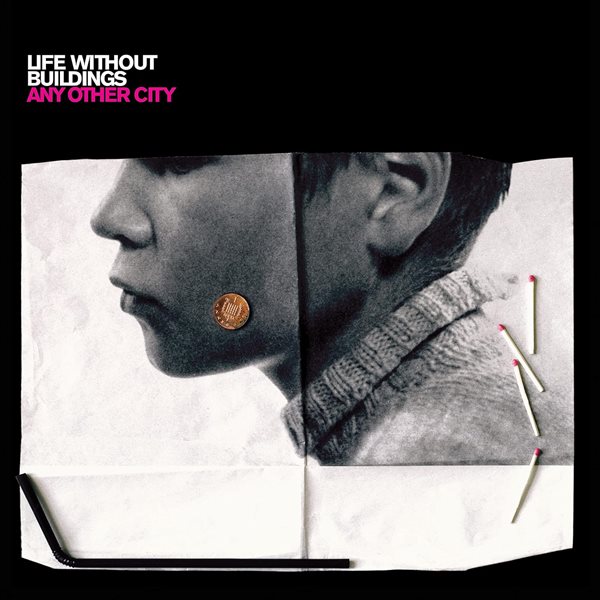
Life Without Buildings – Any Other City (2001)
The first line we hear on the record, “No details, but I’m gonna persuade you,” must be its thesis statement. Sue Tompkins’ animated speech-singing vocal performance is the centerpiece of the album, with her barrage of repetitive phrases and playful inflections being precariously balanced by the ebbs and flows of the post-punk trio. Let’s Get Out weaves angular guitar riffs, drawn-out buildups, and rambling spoken word vocals into what is basically a pop tune. That it scratches all these itches in under four minutes is nothing short of euphoric. Tompkins convinces without the details. Her lyrics are closer to Gertrude Stein or cubism than they are to any indie rocker I can think of—the strength of her phrases comes from the juxtaposition of their emotionally charged nature and the lack of context they’re presented in, allowing them to take on a multitude of meanings through repetition. We can only guess at the contexts of accusations like “for you he wrote something else”, sung in a tone both caustic and heartbroken, or lines like “in any other city, I’m hung up with a short click”, but that only makes them more evocative. And how come she anchors the most euphoric chorus on the record with “I still believe in getting low”? And “holding you is like the new past”. Tompkins’ strength as a lyricist is her ability to evoke entire stories and perspectives with a few delightfully strange phrases that lodge themselves into your mind.
I think the first half is a bit better than the second, though Sorrow is a beautiful, slow-moving, crushing closer, an appropriate crash after the rest of the record. The third song, Juno, might be my favourite, with its soft-loud verse-chorus structure and shiver-inducing slowdown halfway through, building to one last chorus that gives way to the unbearably poignant second half. “Don’t be far from me,” Tompkins sings quietly, before another torrent of guitar riffs. The guitar playing reminds me a bit of Midwest emo, and combined with the evocative lyrics it’s hard not to be reminded of a song like Cap’n Jazz’s Little League—what feeling unites Tompkins’ cries of “my lips are sealed” and Tim Kinsella’s agonized screams of “museum mouth”? I doubt they’d tell us.
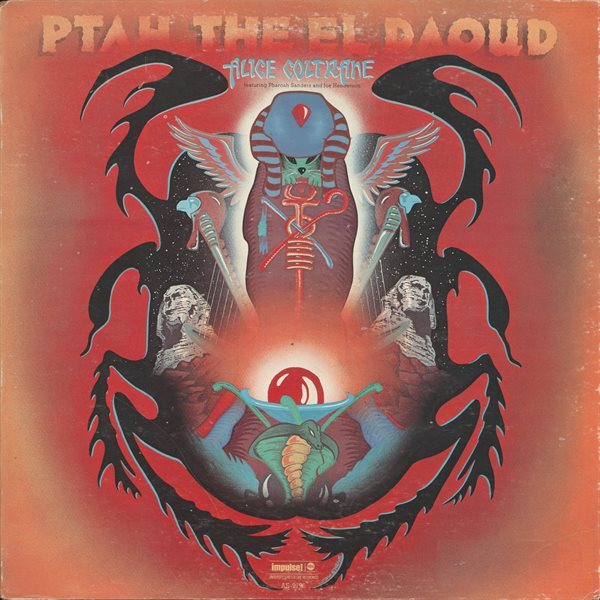
Alice Coltrane – Ptah, the El Daoud (1970)
Alice Coltrane put it best herself: “Sometimes on earth we don’t have to wait for death to go through a sort of purging, a purification.” The four spiritual journeys on Ptah, the El Daoud are proof enough. That bluesy riff of Turiya & Ramakrishna seems to go on forever, and I’ll happily listen to it forever.
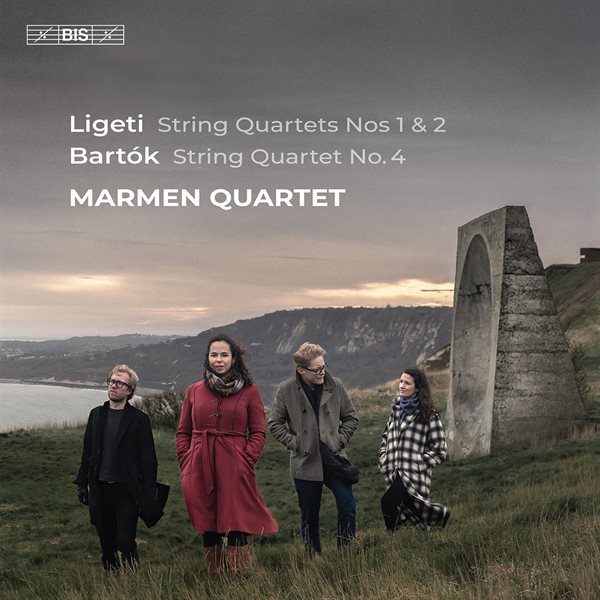
Ligeti & Bartók – String Quartets (Marmen Quartet, 2025)
This is the Marmen Quartet’s recording debut. I like the concept of pairing the Ligeti quartets with Bartók’s fourth (Ligeti’s first was directly inspired by Bartók’s third and fourth), but this recording just isn’t it for me. Discussing the pieces themselves is a whole different consideration, so I’ll restrain myself and just talk about their performance of the Bartók.
For one, their rubato puzzles me. It feels extreme to the point of theatricality, which in itself isn’t necessarily bad, but here it’s just distracting, especially the heavy-handed ritardandos. Too often here “emphatic” and “slow” become synonyms, and the little pauses around moments of emphasis stall the forward momentum. Their slides are much more pronounced than, say, the Emerson recording—again, not necessarily bad, and it makes for a pretty fun second movement, but in my opinion it wrecks the first and final movements. It’s Bartók with the edges sawed off. They lurch where they should lunge. I’ll stick with the Takács.
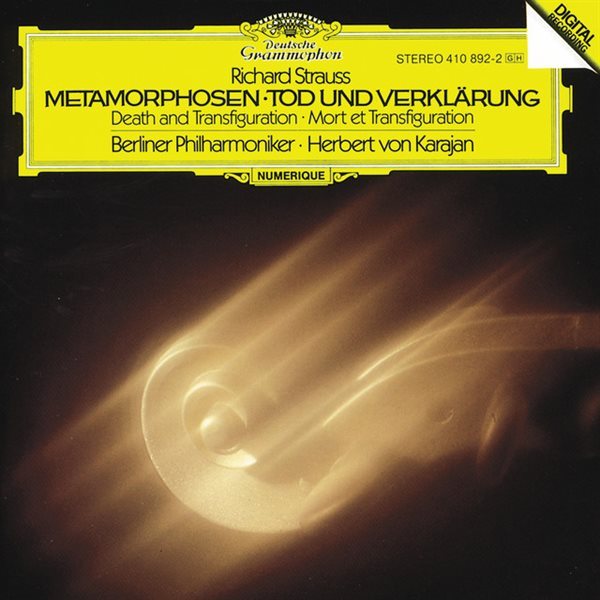
Richard Strauss – Metamorphosen / Death & Transfiguration (Karajan/BPO, 1983)
The only thing I have to say is that the transfiguration theme is beautiful. But I can’t say the piece has cured any fear of death in me, and it seems to only open more questions. Is nostalgia a comfort or a torture? Was the transfiguration earned, or simply inevitable? And what makes a young composer write about death, anyway?
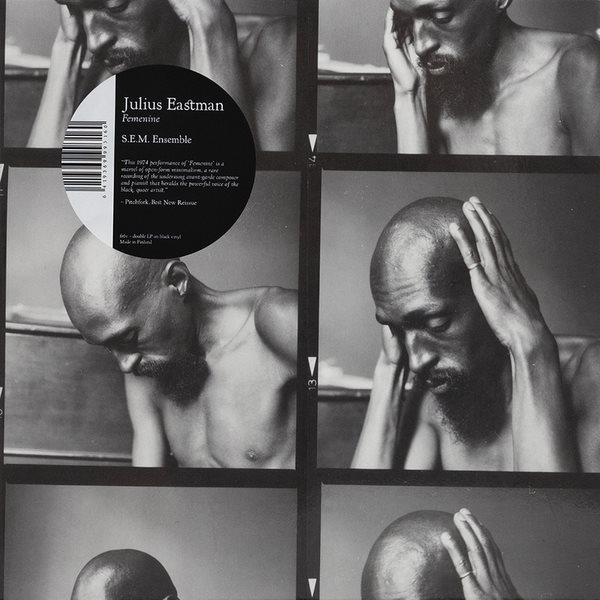
Julius Eastman – Femenine (S.E.M. Ensemble, 1974)
Some people listen to Handel every Christmas.
I listen to Eastman.
Eastman often gets grouped with contemporary minimalists like Steve Reich and Philip Glass, but their compositional approaches were fundamentally different. For Reich and Glass, minimalism began as a technique allowing them to remove the element of self from their work. If the whole piece derives from a predetermined process, then there’s no room for ego. This was something of a theme in the mid-20th century—Boulez had the idea with serialism and wanting the composer to be “anonymous”, a method derived from Schoenberg’s twelve-tone system. Everyone was trying to get away from themselves.
And then came Eastman, a composer who was entirely himself. As he declared in a 1976 interview, “What I am trying to achieve is to be what I am to the fullest: Black to the fullest, a musician to the fullest, a homosexual to the fullest.” As the mid-20th century classical avant-garde was shifting in the direction of impersonality, the opposite was happening in jazz and poetry, both fields deeply influential for Eastman. And who could forget Thelonious Monk’s saying that “a genius is the one most like himself”? What separates Eastman from Reich and Glass is this element of genius—that is, the effect of his brilliant presence in the work, of the moments of joyful improvisation where his ego, along with his bandmates, is asserted, not denied. The work doesn’t follow an impartial process running its course as in Reich or Glass. The idea instead is to allow for as much of each player’s spontaneous self-expression as possible and for the minimalist process to be the occasion for this freedom.
The impartial process allows for the performers’ subjective choices, allows them to reframe it at their whims, impulsive and ecstatic ruptures in a set pattern, a collective curiosity in prodding the parameters of the piece itself, which makes Femenine a very special work—it’s a cross between something like collective improvisation in jazz (like Coltrane’s Ascension) and the process music of Steve Reich (as in Music for 18 Musicians). The result is triumphant, ecstatic, personal, with no set narrative or process but rather the whole ensemble coming alive and playing together, as in a joyous conversation, boisterous and with good food, each freewheeling voice free to assert itself, to celebrate and sing itself in the whole communion. The central ostinato is no longer a containing structure but rather a seed for the rest of the music to grow around. It’s music as an organic process, not a mechanical one—in Eastman’s musical worldview, minimalist music becomes the most freeing genre, not the most pre-determined. The music becomes open, not closed, and becomes so alive. And yet Eastman died pretty much completely forgotten. He deserved much better in his lifetime, but he is still so fully present in the music, and for that we can only thank him.